AI Max Experiment Arrives in Google Ads: Here’s How It Works
Google Ads has always been at the forefront of advertising innovation. Now, with the arrival of the AI Max experiment, Google is stepping into a new era — one where artificial intelligence takes an even more proactive role in how ads are created, optimized, and served.
But what exactly is AI Max? How does it work? What does it mean for advertisers and businesses looking to make the most of their ad spend?
In this blog, we’ll break down everything you need to know about the AI Max experiment in Google Ads — how it works, what features it brings, and how you can leverage it to boost your marketing performance.
🔍 What is the AI Max Experiment in Google Ads?
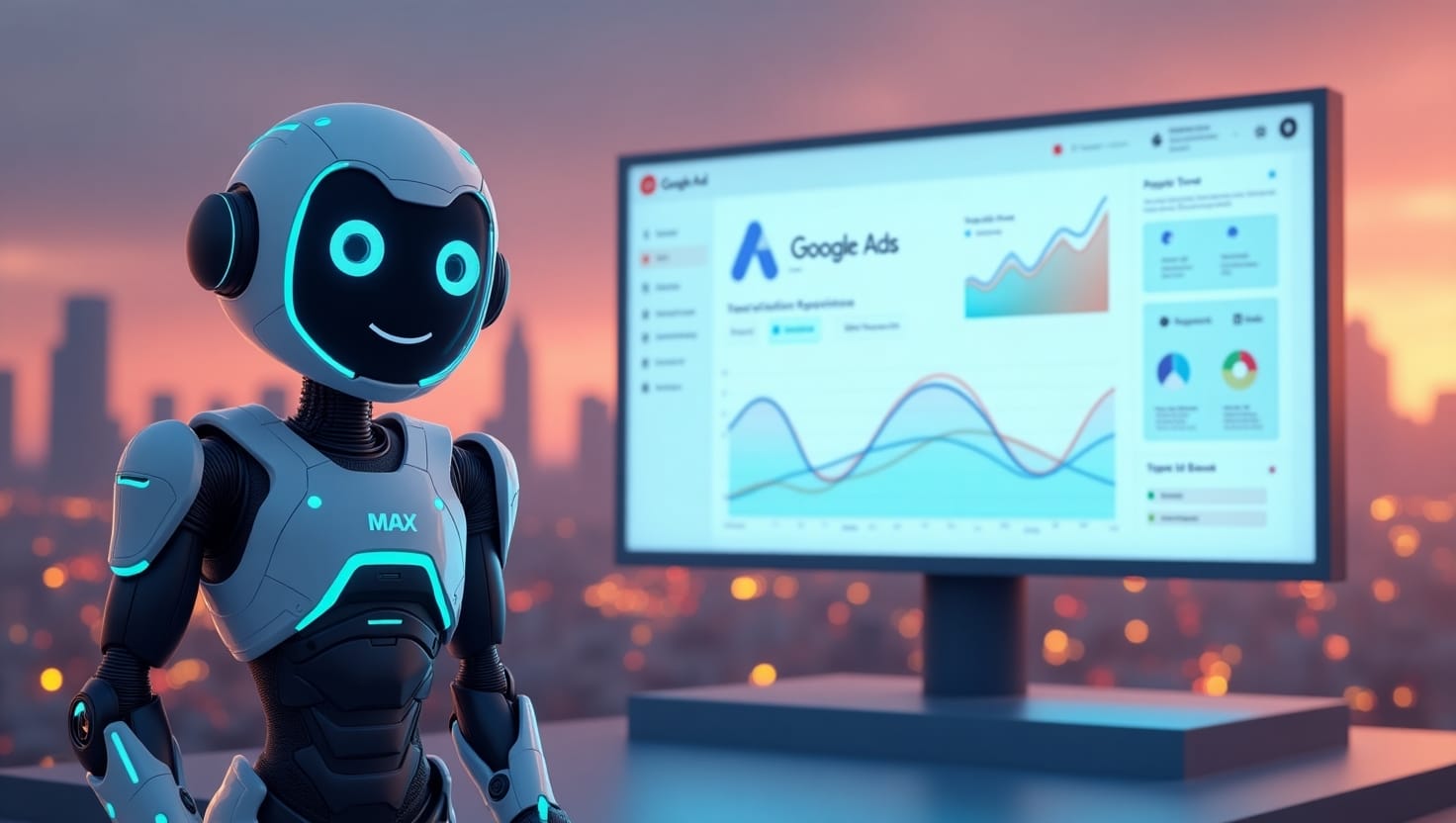
AI Max is Google’s latest initiative to bring AI-first automation to the Google Ads ecosystem. Think of it as a next-generation campaign type, powered by Google’s most advanced AI models, including Gemini AI.
The goal of AI Max is simple but powerful:
Deliver better performance with minimal manual effort.
Unlike traditional campaigns where advertisers need to manually set bids, create multiple ad versions, and optimize targeting, AI Max does almost everything automatically — from creative generation to real-time bidding and audience segmentation.
It builds on the success of Performance Max campaigns, but goes a step further by introducing multimodal AI, auto-generated creatives, and continuous learning loops to drive better outcomes.
🤖 Key Features of AI Max Campaigns
Let’s explore the standout features that make AI Max different from traditional Google Ads or even Performance Max.
1. AI-Generated Ad Creatives
Using generative AI, AI Max can automatically create ad headlines, descriptions, images, and even short videos based on your website, product feed, or goals. You don’t need a design team to launch a professional campaign.
You simply give it a prompt or allow it to scan your landing page — and it builds out creatives tailored to your audience.
Example: If you sell fitness gear, AI Max can generate ad copy and images showcasing gym accessories, training routines, or before-after scenarios — all based on your content.
2. Multimodal AI Understanding
Google’s Gemini AI can understand text, image, and video content together. This means AI Max doesn’t just rely on keywords — it understands context, tone, and visual elements to make smarter decisions on ad placements and targeting.
This multimodal capability allows AI Max to better match the right ad creative to the right user at the right time.
3. Fully Automated Bidding & Targeting
Forget about setting manual bids or choosing keyword match types. AI Max uses real-time conversion data, audience signals, and market trends to adjust bids automatically.
It finds the highest intent users across Google Search, YouTube, Discover, Gmail, and Display — and delivers your ads to them without you lifting a finger.
4. Goal-Based Optimization
AI Max asks you to define your primary goal — such as:
- Maximize conversions
- Maximize revenue
- Drive store visits
- Acquire new customers
- Build brand awareness
Once the goal is set, the AI optimizes everything — bids, creatives, placements — to achieve it using end-to-end AI pipelines.
5. Auto-Learning & Performance Feedback Loop
AI Max campaigns continuously learn from conversion data, user behavior, and market shifts to improve over time.
This means the longer your campaign runs, the smarter it gets — adjusting creatives, targeting, and even tone of messaging to outperform past results.
💼 How AI Max Works with Google Ads Ecosystem
AI Max isn’t replacing Performance Max or Search campaigns — it’s augmenting them with deeper AI integration.
Here’s how it fits into the existing system:
🔗 Integrates with Your Google Ads Account
You can create an AI Max campaign directly inside your existing Google Ads dashboard. It pulls from:
- Google Analytics 4
- Product Feeds (if applicable)
- Existing Campaign Learnings
- Landing Page Content
Read More In Google Ads
🎯 Aligns with Conversion Goals
You choose your goal — just like with Performance Max — and AI Max aligns its strategies accordingly, such as using value-based bidding or cost-per-action (CPA) models.
🛠️ Provides Minimal But Effective Controls
While AI Max is mostly autonomous, Google still gives advertisers manual override options for:
- Brand guidelines
- Negative keywords
- Budget allocation
- Audience exclusions
This balance between AI automation and manual control keeps it powerful but safe for brands.
📊 AI Max vs Performance Max: What’s the Difference?
| Feature | AI Max | Performance Max |
|---|---|---|
| Creative Generation | Fully AI-generated | User-provided + AI-assisted |
| AI Model | Gemini-powered multimodal | Basic ML models |
| Campaign Setup | Minimal input required | Requires feed, assets, goals |
| Learning & Feedback | Real-time continuous learning | Periodic optimization |
| Manual Control | Limited (some overrides) | More user control |
In short, AI Max is more autonomous, faster to launch, and smarter over time — making it ideal for advertisers who want to scale quickly.
✅ Pros of Using AI Max Campaigns
- Faster Setup – No need to spend hours creating creatives.
- Higher Performance – AI finds hidden opportunities and high-converting audiences.
- Improved Creative Diversity – Tailored ads for different audience segments.
- Cross-Channel Reach – One campaign across Search, YouTube, Display, and more.
- Better ROI – Less manual effort, better results.
⚠️ Potential Cons to Watch Out For
- Limited Transparency – Like with Performance Max, you don’t always see where your ads are placed.
- Reduced Manual Control – If you like tweaking every element, AI Max may feel restrictive.
- Dependence on Good Data – If your conversion tracking is off, AI Max will optimize incorrectly.
🔧 Who Should Use AI Max?
AI Max is ideal for:
- E-commerce brands with large inventories
- SMBs that lack in-house creative teams
- Performance marketers who want faster scaling
- Agencies managing multiple clients with limited time
However, if you’re a niche brand with strict tone guidelines or if you rely heavily on local targeting, you may want to test AI Max carefully before going all in.
🚀 How to Get Started with AI Max
- Log into Google Ads
→ Go to Campaigns → New Campaign → (Look for “AI Max experiment”) - Choose a Goal
→ Select conversions, revenue, or new customers. - Provide Input
→ Either let AI scan your site or upload minimal content (optional). - Set Budget & Target ROAS or CPA
→ Let AI optimize from there. - Launch & Monitor
→ Use built-in reporting to track performance and make small adjustments as needed.
📈 Final Thoughts
AI Max is a game-changer in the world of digital advertising. It shows where the future of ads is heading — towards full automation, AI-driven creativity, and performance-based intelligence.
Whether you’re a seasoned advertiser or just starting out, this tool has the potential to amplify your results with less effort and more innovation.
Start testing AI Max campaigns now and get ahead of the curve — because in the world of digital ads, those who adapt fastest, win the most.
🔗 Internal Link Suggestion
Read More: Update with techsplits.com – Stay ahead with the latest in AI and marketing